Virtuous company behaviour is made up of many indirect actions that can really affect the product’s life cycle. These actions become essential when multiplied by the tonnes of product processed. Our care for the environment is realised through highly energy-efficient production processes designed to produce/manufacture a 100% recyclable product. It is increasingly necessary for each production/working/logistic process to be implemented with a strong sense of responsibility towards the future and, for this reason, Dott.Gallina has been committed to improving the environmental impact of its activities for many years.
The design of both the entire production site and the plants used has been subject to continuous modernisation with the aim of achieving energy self-sufficiency and the elimination of environmental waste. In fact, for years, the company has been implementing a process to recover waste material from industrial production, by means of an in-house granulation process, also reducing the need for virgin raw material.
The company is also working on the recovery of panels from end-of-life installations to make new regenerated products. If there is a project that requires the replacement of spent Dott.Gallina products, we collect them to feed an extrusion line dedicated to new "regenerated" panels, which are used as façade cladding or as opaque partitions.
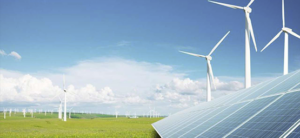
How did we upset the concept of energy-intensive industry, achieving self-production and complete coverage of our energy needs?
 |
 |
 |
The use of arcoPlus® modular multiwall systems to create large translucent surfaces improves the energy performance of a building thanks to the use of natural light as the primary source of indoor lighting and thanks to high thermal insulation, resulting in reduced air conditioning and heating costs. Our panels guarantee thermal transmittance values as low as 0.4 W/m2K, and even the assembly accessories are designed as thermal break solutions.
In addition to this, specific surface treatments for solar radiation management customise the performance of the panels according to individual applications.
Thanks to its unique characteristics, since 2016, polycarbonate has been listed among the innovative materials and systems of the Recycle Observatory Report, promoted by Legambiente. Among the projects that have achieved environmental awards, such as LEED® certifications, are: the roofing of the shopping centre “Il Centro” in Arese-IT and the translucent envelope of the “Camp Ferro” and “Turo Peira” sports centres in Barcelona-SP.
 |
 |
 |
Natural lighting |
Thermal insulation |
Living comfort |
 100% RECYCLABLE 100% RECYCLABLE |
 ENERGY EFFICIENCY ENERGY EFFICIENCY |
 GIVING PRODUCTS A SECOND LIFE GIVING PRODUCTS A SECOND LIFE |
|
Polycarbonate products are 100% recyclable and, thanks to their low melting temperatures, only a small amount of energy is required for their production or recycling. An important feature of thermoplastics is that they can be heated, cooled and reheated without significant degradation. In the recycling chain, polycarbonate in one of the products that retain many of their original characteristics. |
Multiwall surfaces make it possible to maximise the benefits of natural resources such as sunlight and solar radiation; they also offer advantages in terms of indoor living comfort, air recirculation and absence of greenhouse effect. The energy balance calculation, carried out in accordance with Standard EN 12831, points our the higher fuel requirement to heat an industrial building where U-GLASS doors and windows are installed compared to the same building with multiwall polycarbonate doors and windows. |
Polycarbonate is too precious for single use... In fact, after a first use, thanks to a cleaning and granulation process, it is possible to give it a second life to make electronic components, furniture, design objects, containers, filaments for 3D printing. According to life cycle analyses carried out by raw granule producers, using even only 30% of recycled polycarbonate reduces the carbon footprint by a quarter and energy consumption by 30% compared to processing virgin resins of the same type. |
 |
 |
 |
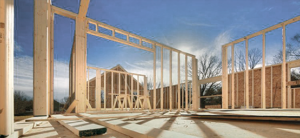
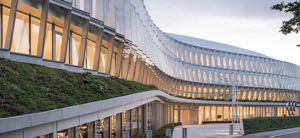
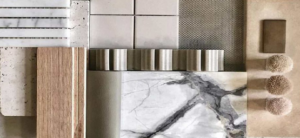
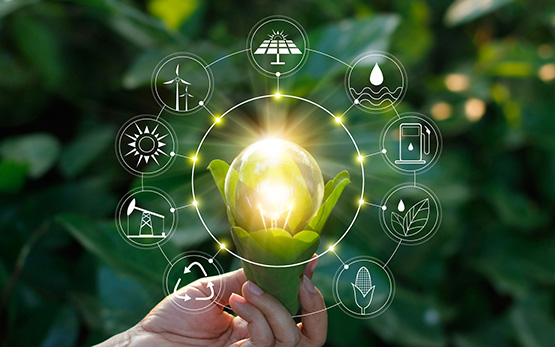
Sustainable building will be able to evolve thanks to a commitment involving three levels of the construction sector chain at the same time: designing new architectural concepts, designing new construction methods and investing in the search for innovative materials, which can allow for the development of new solutions that comply with increasingly stringent energy standards.
Floors, doors, windows, insulation and bricks must be analysed by means of a comparative evaluation during the design phase, so that the designer can give shape to a building that is consistent and interconnected in all its elements. In fact, each element must give its-own contribution in order to achieve a cumulative score high enough to obtain important awards and certifications as “sustainable designs”, such as the famous LEED®, both for new buildings and redevelopments.
 |
 |
 |
 |
| Construction techniques | Suitable shapes and volumes | Low environmental impact materials | Renewable energy sources |
 |
| LCA analysis |
|
The company Dott.Gallina has chosen to update the assessments on the environmental performance of arcoPlus systems in order to provide essential data to designers who intend to create projects with a conscious environmental impact. In fact, in the construction sector, more and more attention is paid to energy efficiency and environmental protection. If you need information about our EPD® declaration to assess the environmental impact of the polycarbonate manufacturing process within your project, contact our technical department at technical.support@gallina.it. |
 |
| BIM objects |
|
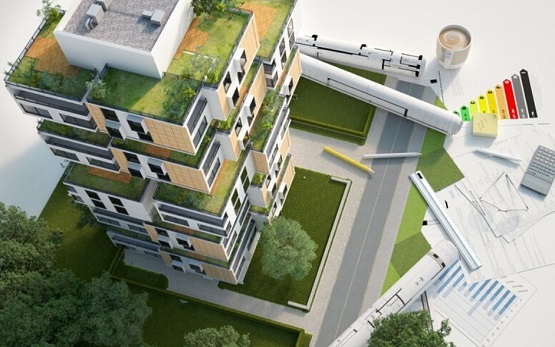
To be closer to current 3D design methods, we have developed and made available to architects the BIM objects of our main modular systems. This with the aim of facilitating the evaluation processes for the choice of polycarbonate as an adequate solution for eco-sustainable standards that require maximum energy savings. In fact, in addition to the assembly details and dimensional information, the BIM documentation contains a considerable amount of technical data regarding the performance of each product in terms of thermal insulation and light transmission. |