 |
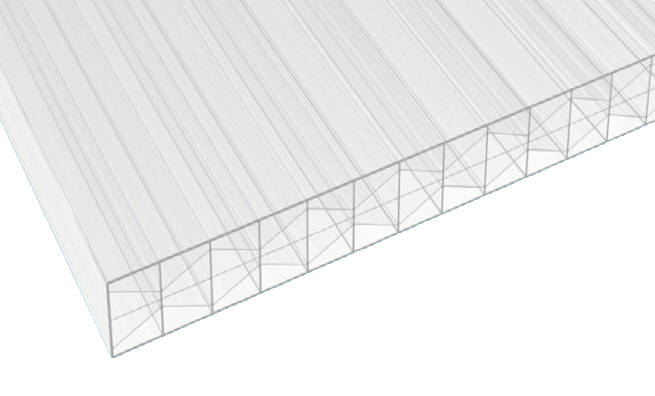
Plastic unfortunately carries a negative reputation and is often considered one of the most polluting elements in our environment and in our beloved nature. However, Dott.Gallina, along with all the polycarbonate manufacturing companies in Europe that are part of the EPSE association, is actively working to change this common perception. The real issue is linked to the excessive use of single-use plastic items and their improper management when they are 'thrown away.' In response to this challenge, the new GreenPoli cellular sheet has been developed, characterized by an elegant translucent satin clear color. This innovative solution was designed with the intention of minimizing waste during our production processes, thanks to in-house granulation, thus leveraging the extraordinary chemical-physical properties of polycarbonate. Through these efforts, Dott.Gallina not only promotes the responsible use of plastic, showing that with proper management, waste materials can instead become primary materials, but also extends the useful life of the final product to 20, 30, or even 40 years. |
Reduction of 23% of CO2 emitted into the environment to produce GreenPoli sheets compared to standard sheets
Implement circular production choices so save raw material with less waste
 |
 |
 |
|
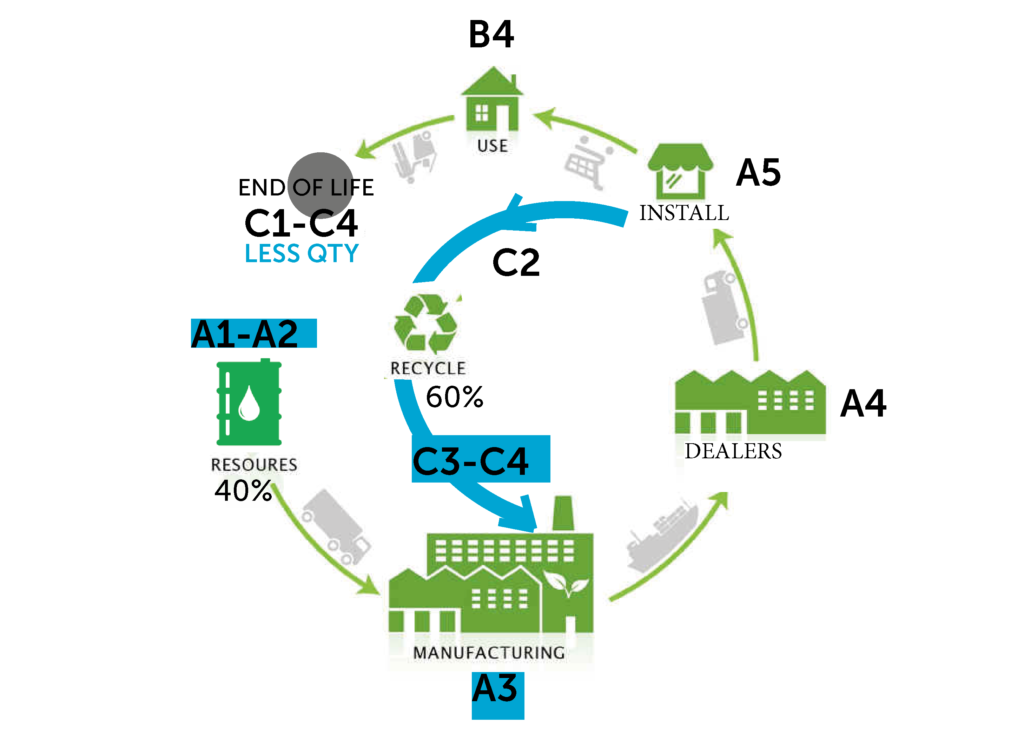
Reduction of production waste in Dott.Gallina facilities, which would otherwise require additional direct and indirect resources for disposal and transportation. |
Lower demand and consumption of virgin fossil-based raw materials, resulting in re- duced granulation and transportation costs from extraction sites. | Lower energy consumption because 60% of the material used has already been processed and heated to reach the appropriate molecular state for chemical-mechanical performance |
ArcoPure, the transparent nanotechnology to improve the air we breathe
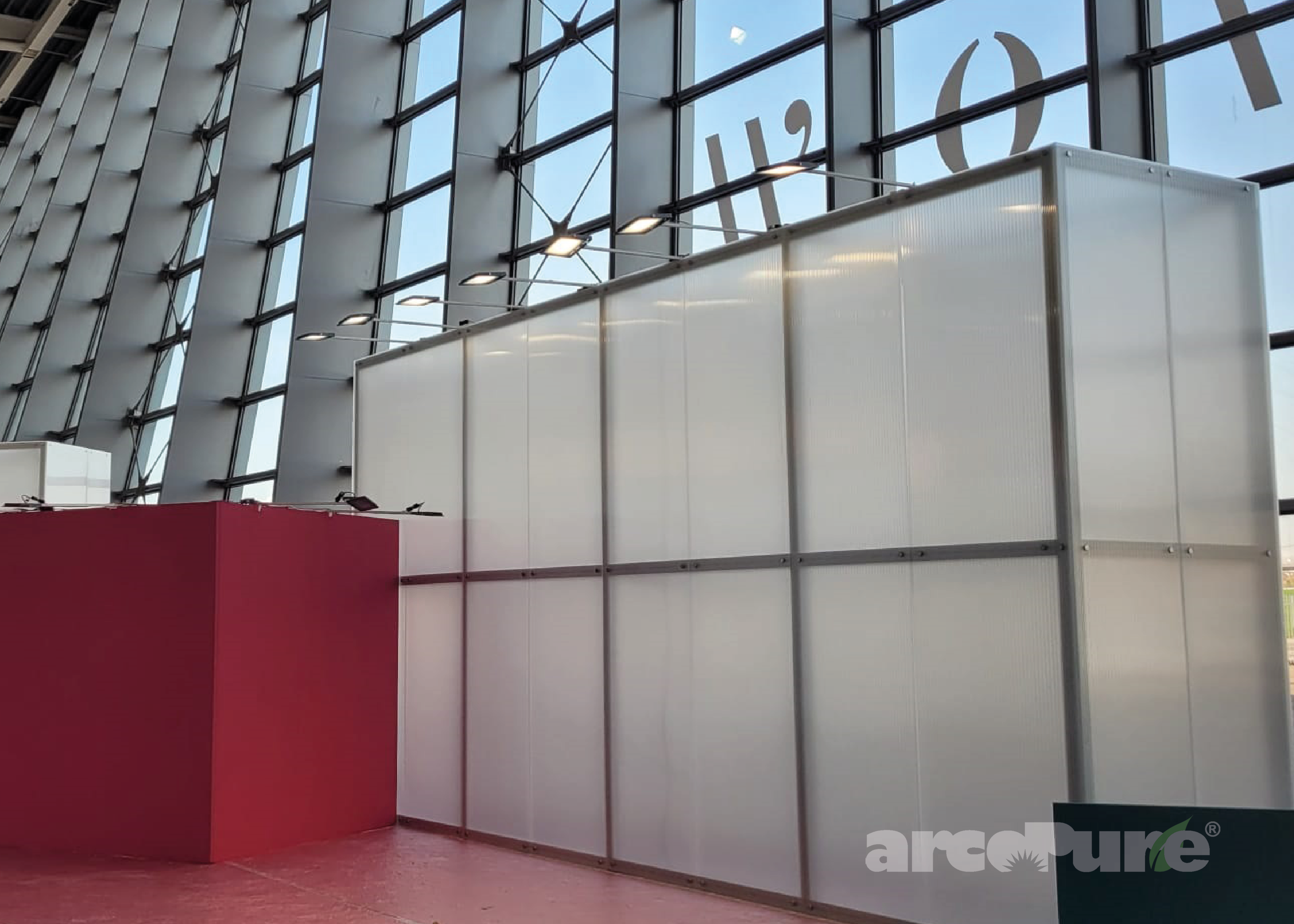
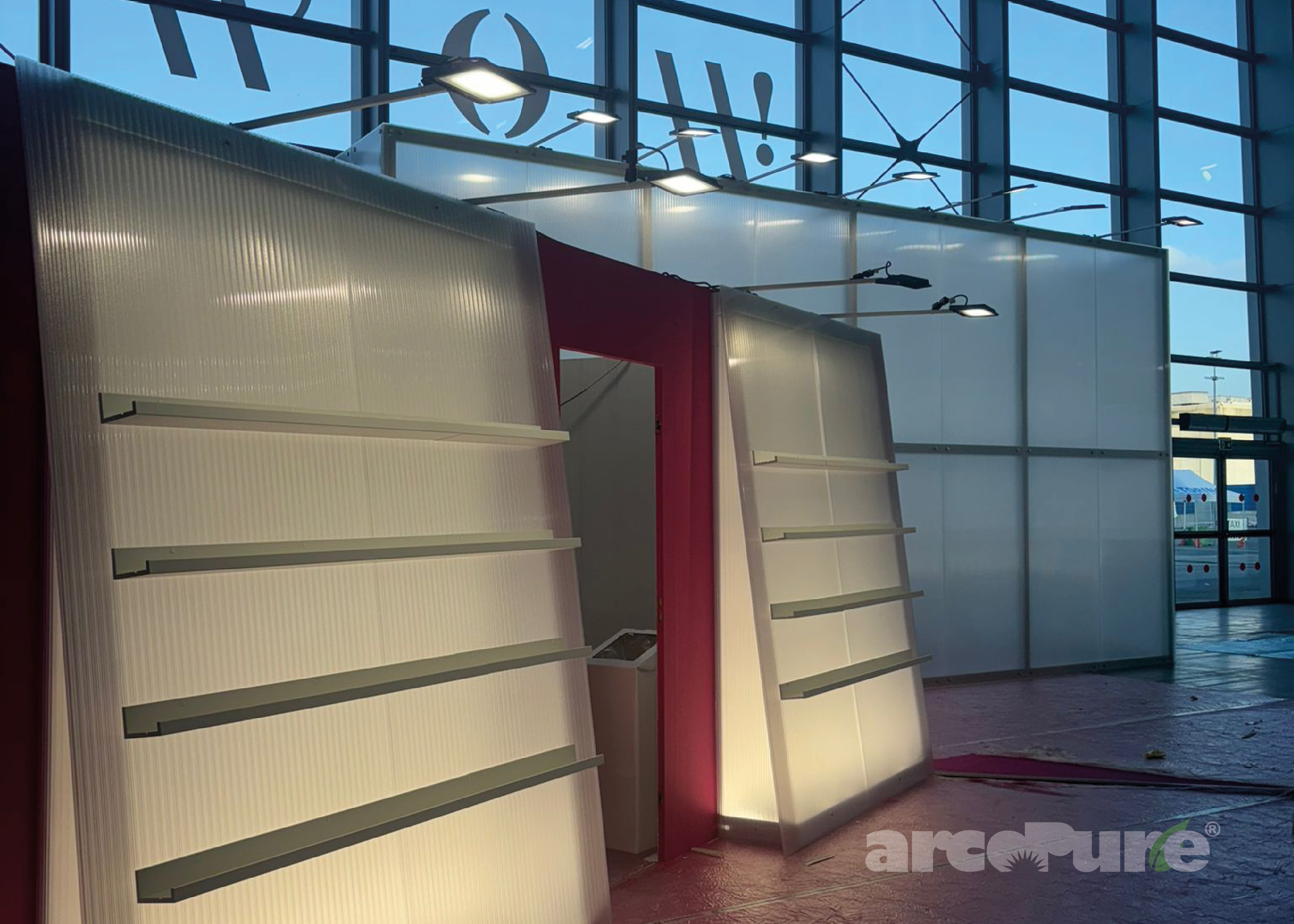
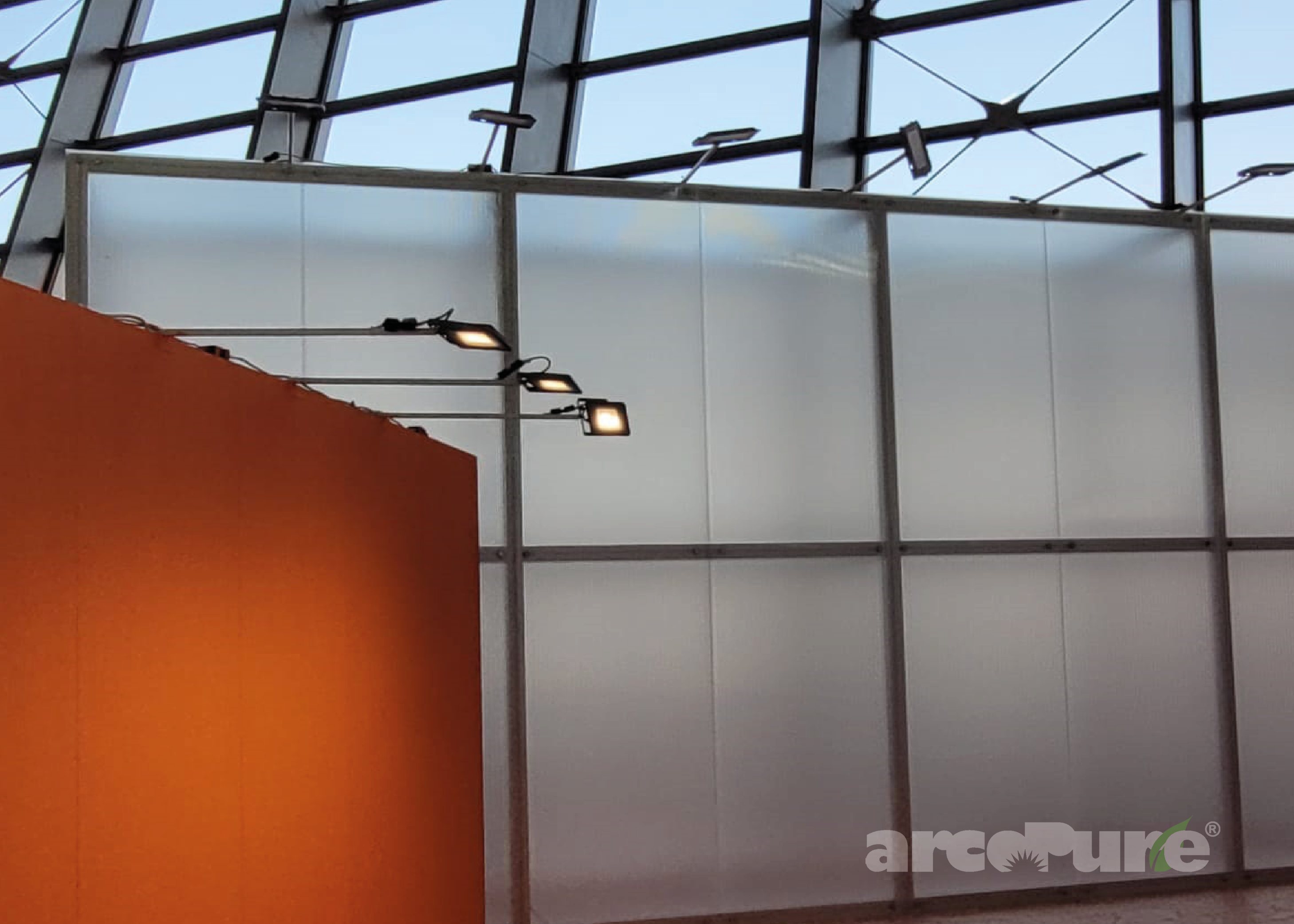
Dott. Gallina is proud to introduce the new product to the market in the context of a highly prestigious event for the Turin area and its culture. This product, GreenPoli panels, is designed to create tall, translucent vertical walls that define the thematic spaces of WOW - Worlds of Words, an area dedicated to the world of magazines and editorial projects from both Italy and abroad. The common thread uniting the five areas, characterized by vibrant and luminous colors, is the transparent and brilliant design, which reflects and diffuses natural light within the pavilions.
Additionally, our recycled polycarbonate panels have been customized with innovative arcoPure nanotechnology, which purifies the air inside the pavilion by reducing VOC and NOx pollutant particles. This surface treatment, applied through electrostatic nebulization, is activated by the UV component of sunlight. Through the process of photocatalysis, it alters the molecular structure of pollutant particles, transforming them into inert molecules of mineral salts and water vapor, thereby improving the quality of the air breathed within the spaces.
 |
 |
 |
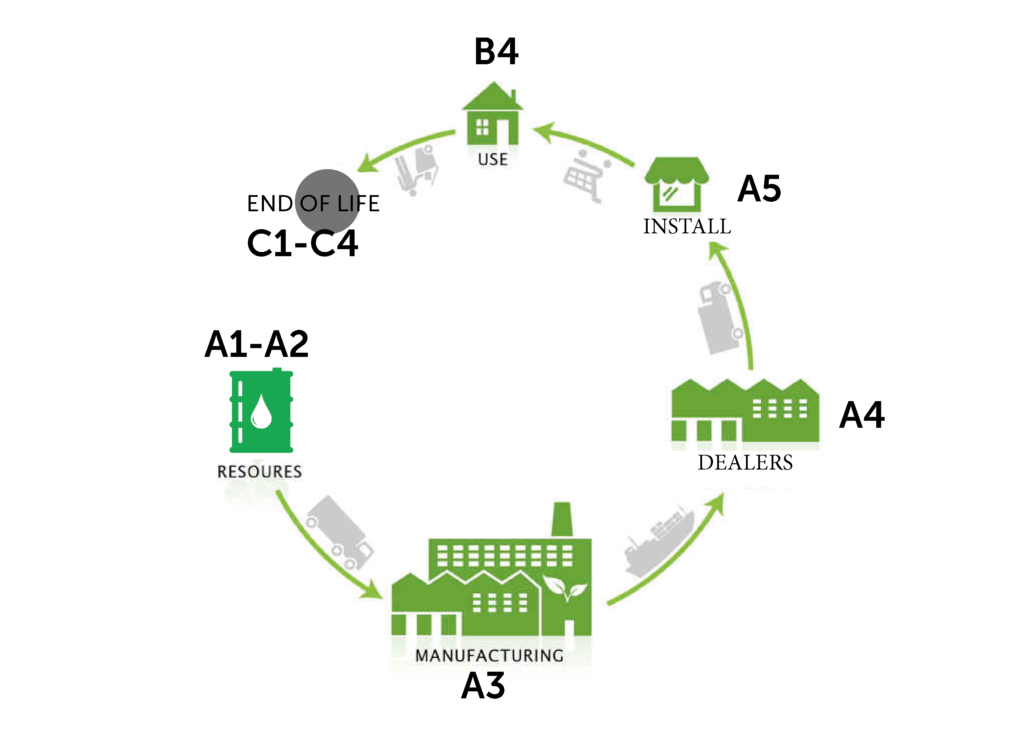
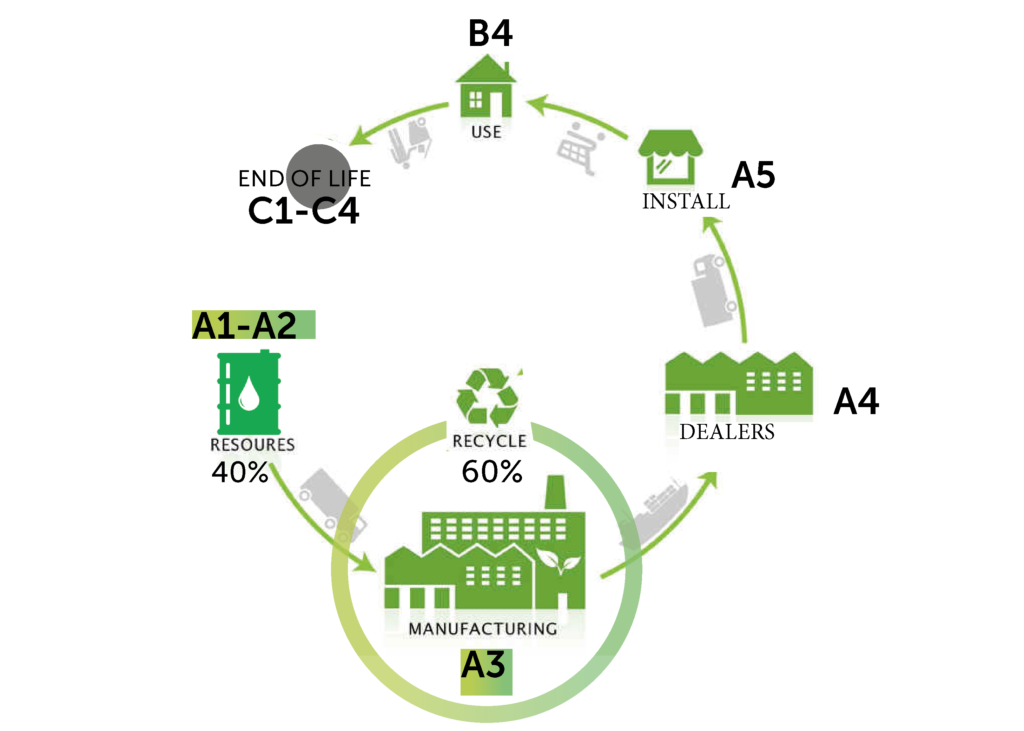
The value of -23% CO₂ to quantify the environmental benefits of GreenPoli comes from in-depth analyses conducted on the life cycle of our standard products in the PoliCarb range, where a significant benefit is highlighted in the early stages of the life of our sheets. In fact a product composed of 60% recycled material through the internal INHOUSE REGRIND can improve CO₂ emission values and bring benefits to phases A1, A2, and A3 of the LCA (Life Cycle Assessment), in addition to contributing to EPD (Environmental Product Declarations) certifications.
 |
 |
 |
|
VIRGIN RAW MATERIAL |
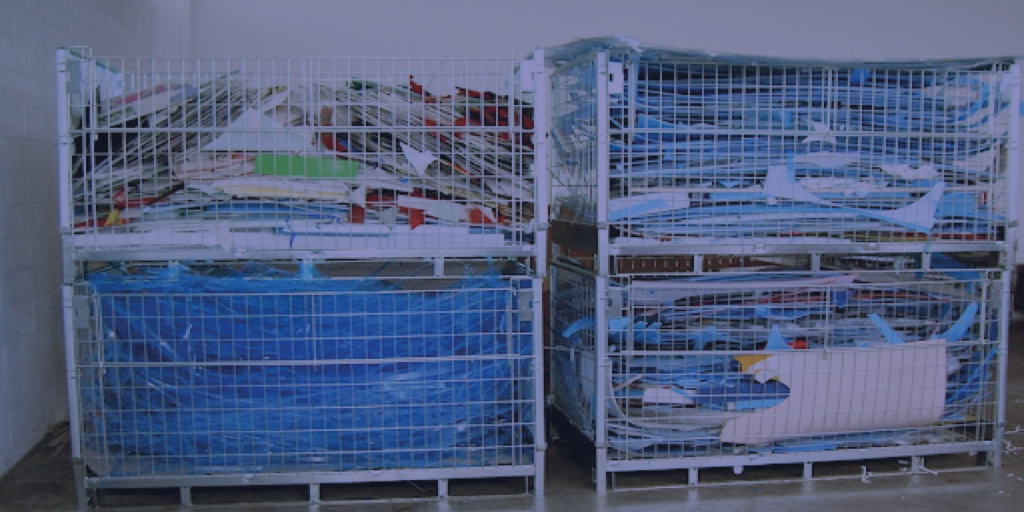
POST-PRODUCTION recycling |
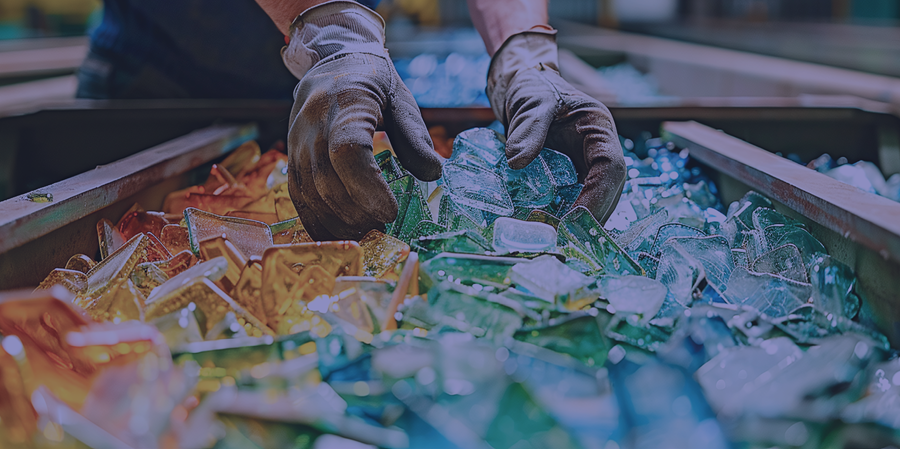
PRE-CONSUMER recycling |
 |
 |
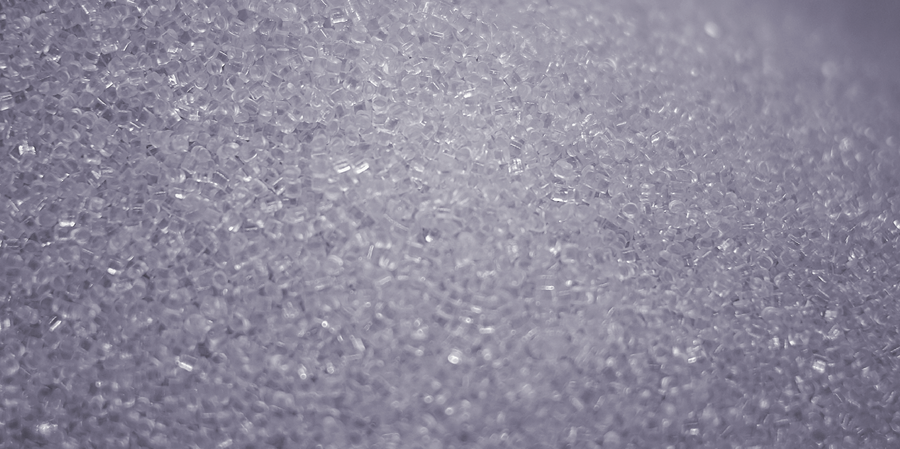 |
The methodology of re-granulating post-production material is just the first concrete step, but the company is working to create new recycled solutions through the collection of trimmings from a network of trusted distributors, also reusing sheets in the pre-consumption phase. Additionally, we are conducting research on the use of synthetic polycarbonate raw material derived from plant sources and on raw materials from clean chemical processes that modify the molecular structure of all types of thermoplastics.